We are publishing below only the part of the dissertation concerning the association in Mindelo 🙂
School year 2013-2014
SIMABO: A CASE OF ENVIRONMENTALISM IN CAPE VERDE
Author: Stefania Zanon
CHAPTER 4. A TERRITORY-SIZED SOLUTION: SIMABO
4.1 Stray dogs on Sao Vicente: statistical data
Monitoring the dog population on the island of São Vicente in March 2012 – Cape Verde
The estimate of the dog population on the island of São Vicente is an essential prerequisite for obtaining useful information (number of animals and their distribution) in order to successfully carry out the sterilisation campaign within the project funded by the European Union. As shown by numerous authors, a sterilisation campaign is effective in reducing the number of animals in an area if at least 75-80% of the animals are sterilised. A dog population stops increasing if 55% of the females present are sterilised and begins to decline if sterilisation concerns 65% of the females. These data help us understand how an accurate and realistic population estimate is necessary for effective management of the sterilisation campaign.
Methods used
The dog population estimate was made following the protocol below:
- Selection of sampling areas representative of the average conditions of the environment frequented by the dogs on the island; for this purpose, both urban and rural areas were sampled;
- Carrying out transects, on foot, with observation, counting and location of the dogs present. The dogs were located with the help of GPS equipment, traditional paper maps and electronic maps;
- Carrying out the same transects and noting signs of indirect presence (faeces in particular);
- Assessment of the number of dogs present inside houses in the same areas where dogs in the street were counted. This assessment was carried out through house-to-house interviews;
The population estimate was carried out by selecting 12 different sample areas, of which:
- 7 sample areas to assess the density of dogs present in urban areas
- 5 sample areas to assess the density of dogs present in rural areas
Total size of the estimated dog population on the island of São Vicente
| Lower limit 95% | Average pop. | Upper limit 95% |
| 9.823 | 11.838 | 13.853 |
Conclusions
- This research provided, for the first time ever, an estimate of the number and an assessment of the distribution of the dog population on the Island of Sao Vicente.
- As expected, the distribution of dogs on the island is particularly influenced by human presence, concentrating especially in the urban area of Mindelo and to a lesser extent in the small villages. In the urban area the density of the dog population is 5.7 times higher than the density found in rural areas. The urban and rural populations also differ in terms of the population sex ratio (ratio between the number of males and females). In urban areas this value is 1.2 compared with a value of 2.4 in rural areas.
- The dog population on the island was estimated at around 12,000 animals. Considering that in some cases during the census operations there were problems contacting all the house owners (possible source of underestimation of the data), this estimate could be increased by a percentage equal to 10.2% in urban areas and 13.9% in rural areas.
- The population estimate will be very useful for the future management of the dog population on the island and in particular:
- It will undoubtedly be useful for planning the sterilisation campaign (how many animals to sterilise and where to concentrate efforts).
- It will make it possible to better understand the population structure and in particular the sex ratio. In our sample the population appears markedly unbalanced, with a greater prevalence of males. This data would make it possible to consider sterilisation strategies that provide a more favourable cost/benefit ratio (e.g. initially concentrating sterilisation efforts on females, especially in urban areas where their prevalence over males is lower – we recall that sterilising 65% of the females in a population makes it possible to reduce the overall population density in the long term).
- It will make it possible to assess the impact of the sterilisation campaign on the dog population dynamics over time. Repeated censuses in the coming years should show a downward trend in densities if the sterilisation operations are effective.
- It will make it possible to assess the presence of critical points with greater aggregation of dogs due to different environmental factors (presence of food – fish market; presence of rubbish – dump) and where there is therefore a greater urgency to carry out interventions aimed at resolving the critical issue detected (all the animals observed were recorded on electronic maps, a tool that allows effective population management).
- 2 Simabo: an organisation for the protection of animals and the environment in Sao Vicente

The story
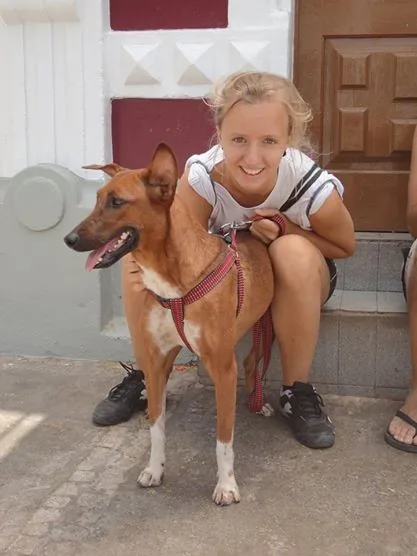
First success for Simabo: Jendo, the first little dog from Simabo operated on at the Veterinary Emergency Centre in Praia (Cape Verde) as part of the Bons Amigos project, funded by an Austrian association. Animals involved in accidents or injured, or with serious illnesses, are flown to the capital. They are generally animals that live in the street and are therefore more exposed to all sorts of dangers. When they come back healed, Simabo is committed to finding them an adoptive family.
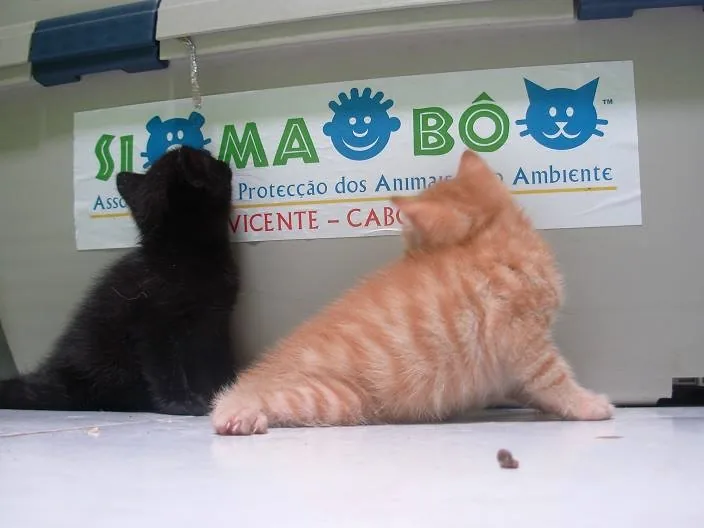
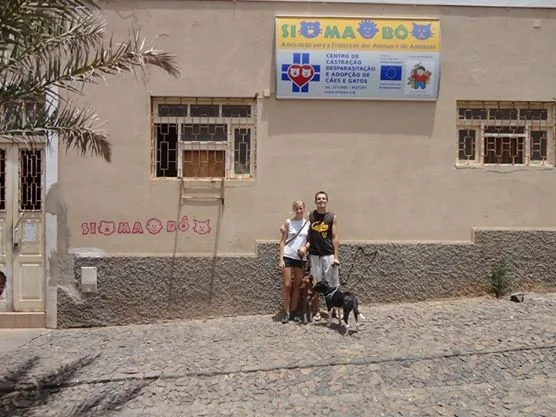
Simabo is a Creole expression that means “them like you”. It is an NGO for the care and protection of animals and the environment, based in Mindelo, on the island of Sao Vicente, Cape Verde.
It was founded in 2008 by Silvia Punzo, from Alessandria, who has now lived for 8 years on the island of São Vicente, in the archipelago of Cape Verde. According to her, indifference, violence and gratuitous cruelty are often the result of a lack of culture and education rather than genuine wickedness. For this reason the association, founded with local animal lovers, was given that name.
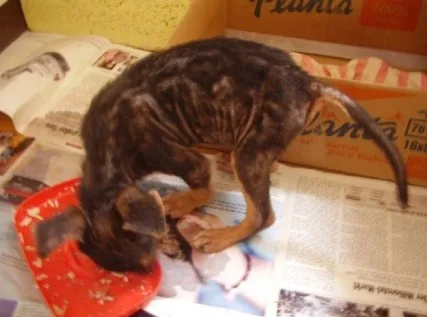
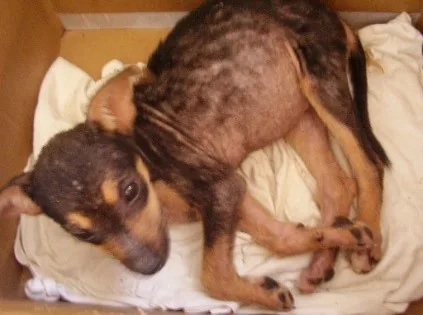
She began this battle with the help of the whole family, personally caring for, so to speak, in an artisanal way, the needy and injured animals found in the street. Today, in the association’s headquarters, a former abandoned house restored through the hard work of some Italian and local volunteers, around 30 animals can be “admitted”, receiving food and intensive care, in addition to the 70 permanent residents in the house, awaiting adoption.
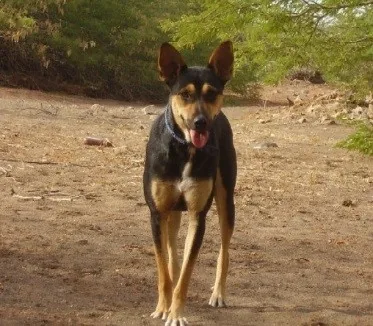
Simabo: another way of thinking, but not without complications
The most ambitious objective is to raise awareness among the population by acting directly against stray animals through parasite-prevention campaigns, adoption and sterilisation: a very difficult task in a poor country that controls the number of animals by carrying out mass poisonings of dogs.
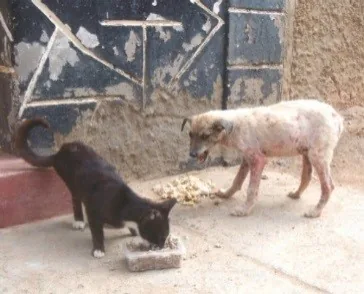
Silvia wants to change this way of thinking: she is convinced that by treating the illnesses of dogs and cats it is also possible to solve skin diseases (30% of children suffer from them), she believes that the fate of living beings is shared and proposes a combined form of help, such as an original aid campaign paying the school fees of children who adopt a dog or a cat (and who commit themselves to looking after it under the association’s supervision).
With just 15 euro a year, in fact, anyone can pay the school fees of children who adopt an animal. In this way, the poorest children, who often live in the street and are very much in contact with poor hungry animals, are offered a material and cultural opportunity for redemption and learning. Through children, the culture of respect can reach families.
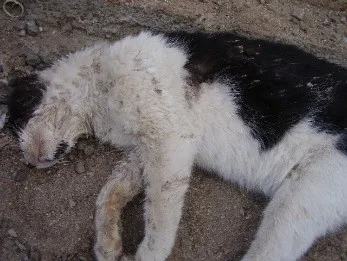
Simabo has very little: equipment and medicines are needed, simple items such as little cages for transporting animals, which are difficult to find locally. Sterilisations are carried out periodically on site and initially emergency operations were done in the clinic on the island of Praia, as there were not always vets available locally. Now, fortunately, there are almost always two permanent vets at the centre.
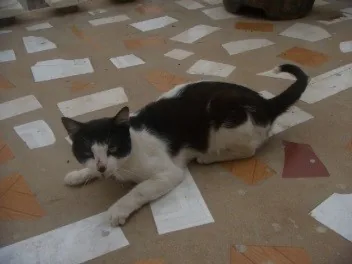
4.3 Simabo’s solution to stray animals: Viralata project
| Designation | Fight against stray animals on the island of Sao Vicente – Pilot project for the archipelago of Cape Verde. |
| Location | Cape Verde, São Vicente, Mindelo |
| Costs | Total cost of the action: 267 000 euroAmount requested by the contracting authority: 200 000 euro% Of the total eligible costs of the action: 75% |
| Total duration of the action | 36 months |
| Objective of the action | Eliminate stray animals on the island of São Vicente and test an intervention model for the long-term control of the feline and canine population in the archipelago of Cape Verde. |
| Groups/bodies for which the project will have a direct and positive impact | Institutions (such as São Vicente, the Ministries of Health and Rural Development) and permanent office staff, responsible for ensuring the continuity of the sterilisation service, therapy and parasite prevention. |
| Final beneficiaries (those who will benefit from the project in the long term) | The direct beneficiaries of the action are: – Owners of domestic animals, in particular: • indigent people, • women • children; – Inhabitants of rural areas, – Disabled people, – Two Italian universities. Indirect beneficiaries of the action are: – Foreign veterinary graduates, – Local vets, – The private sector, – All islanders who do not have animals |
| Expected results |
|
| Main activities |
|