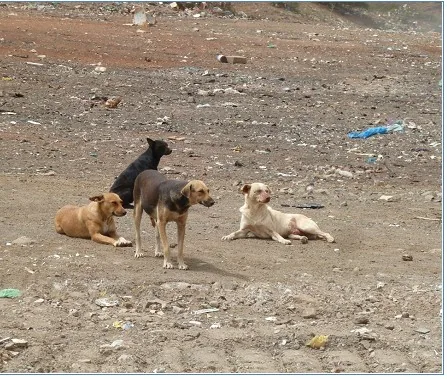
Estimating the dog population of the island of Sao Vicente was an essential prerequisite for obtaining useful information (number of animals and their distribution) in order to carry out the sterilisation campaign successfully within the framework of the project funded by the European Union (EuropeAid/130817/L/ACT/CV). As shown by numerous authors, a sterilisation campaign is effective in reducing the number of animals present in an area if at least 75-80% of the animals are sterilised.
A dog population stops growing if 55% of the females present are sterilised (Di Nardo et al., 2007) and begins to decline if sterilisation affects 65% of the females (Reece & Chawla, 2012). These data help us to understand how an accurate and realistic population estimate is necessary for effective management of the sterilisation campaign.

This arduous task was magically carried out for Simabo by Prof. Paolo Tizzani, researcher at the University of Turin – Department of Animal Production, Epidemiology and Ecology – Section of Parasitology, and specialist in wildlife resource management, who in three weeks personally counted, with the help of Ravi, Simabo’s animal welfare officer, the dogs on the island in 12 sample areas, then projecting the results across the whole territory to obtain the total population figure.
The dog population estimate was made using the following protocol:
- Selection of sample areas representative of the average conditions of the environment frequented by dogs on the island; to this end, both urban and rural areas were sampled.
- Carrying out transects, walking routes, with observation, counting and location of the dogs present. The location of the dogs was carried out with the aid of GPS equipment, traditional paper maps, electronic maps and GIS (Geographic Information System)
- Carrying out the same transects and noting indirect signs of presence (faeces in particular)
- Assessment of the number of dogs present inside houses in the same areas where the dogs in the street were counted. This assessment was carried out through interviews conducted house by house.
Example of data collected in a sample area:
|
Sao Pedro |
|
|
Dogs in the street |
53 |
|
Dogs in house M |
64 |
|
Dogs in house F |
29 |
| Total number of dogs |
137 |
|
Transect km |
6.5 |
|
Street abundance |
8,2 |
|
Sampled hectares |
9,2 |
|
Density/ha |
14,9 |
|
Total number of houses |
160 |
|
Houses without dogs |
54 |
|
Houses with dogs |
67 |
N.B. the total number of dogs does not derive from the arithmetic sum of “Dogs in house” and “Dogs in the street”
Percentage of houses with dogs: 55,4%
Average number of dogs per house: 0,8
Percentage of houses without answers: 24,4%
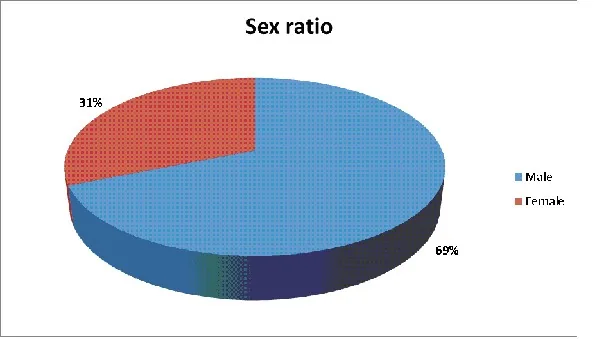
Sex-ratio M/F = 2,2:1
Results
Size of the dog population on the island of S. Vicente
Average density in the urban area
|
Mean |
Std. Dev. |
Std. Err. |
Lower 95% |
Upper 95% |
|
14,4 |
8,5 |
1,3 |
11,7 |
17,1 |
Population size in the urban area (estimated area: 750 ha).
|
Area (ha) |
Lower 95% |
Mean pop. |
Upper 95% |
|
750 |
9.285 |
11.300 |
13.315 |
Population size in the rural area
|
Sao Pedro |
Salamansa |
Calhau |
Baia Gates |
Rib. Vinha |
Rib. Calhau |
|
137 |
114 |
24 |
31 |
65 |
167 |
Total estimated population size on the island of Sao Vicente
|
Lower 95% |
Mean pop. |
Upper 95% |
|
9.823 |
11.838 |
13.853 |
In the urban area we found i) 42.2% of houses without answers (owner not present); ii) 40.2% of the houses from which an answer was obtained had a dog inside; iii) an average density of dogs per house of 0.6. Using these factors as correction parameters, it can be hypothesised that the urban area has a population size 10.2% greater than that estimated with the numbers at our disposal (projected population size).
In the rural area we found i) 33% of houses without answers (owner not present); ii) 52.9% of the houses from which an answer was obtained had a dog inside; iii) an average density of dogs per house of 0.8. Using these factors as correction parameters, it can be hypothesised that the rural area has a population size 13.9% greater than that estimated with the numbers at our disposal (projected population size).
Conclusions & Recommendations
- This research has provided, for the very first time, an estimate of the number and an assessment of the distribution of the dog population on the Island of Sao Vicente.
- As expected, the distribution of dogs on the island is particularly influenced by the presence of people, concentrating in particular in the urban area of Mindelo and to a lesser extent in the small villages.
- This last assessment is particularly evident when looking at the density values. In the urban area the density of the dog population is 5.7 times higher than the density found in rural areas.
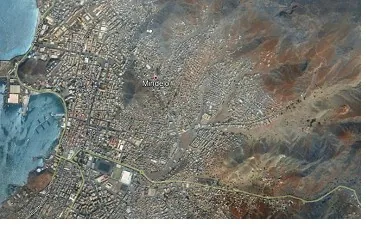
The city of Mindelo seen from GoogleEarth
- The urban and rural populations also differ in terms of the sex ratio of the population (ratio between number of males and females). In urban areas this value is 1.2:1 compared with a value of 2.4:1 in rural areas.
- The dog population of the island was estimated at around 12,000 units. Considering that in some cases during the census operations there were problems contacting all the house owners (possible source of underestimation of the data), this estimate could be increased by a percentage value equal to 10.2% in urban areas and 13.9% in rural areas.
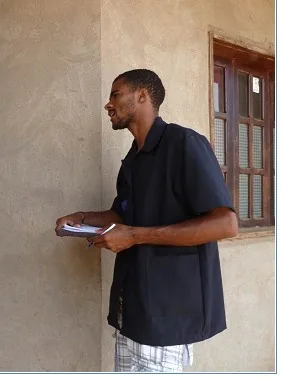
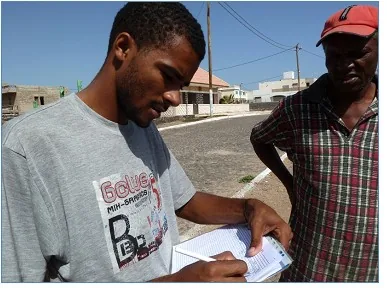
Ravi on the doorstep of one of the many houses touched by the census of the dog population of Sao Vicente carried out last May.
- The population estimate will be very useful for the future management of the island’s dog population and in particular:
- It will undoubtedly be useful for planning the sterilisation campaign (how many animals to sterilise and where to focus).
- It will make it possible to better understand the population structure and in particular the sex ratio. In our sample the population appears clearly unbalanced, with a greater prevalence of males. This data would make it possible to consider sterilisation strategies that provide a more favourable cost/benefit ratio (e.g. concentrating the sterilisation effort first on females, especially in urban areas where their prevalence over males is reduced – let us remember that by sterilising 65% of the females in a population it is possible to reduce the overall population density in the long term).
- It will make it possible to assess the impact of the sterilisation campaign on the population dynamics of the dogs over time. Repeated censuses in the coming years should show a tendency for densities to fall if the sterilisation operations are effective.
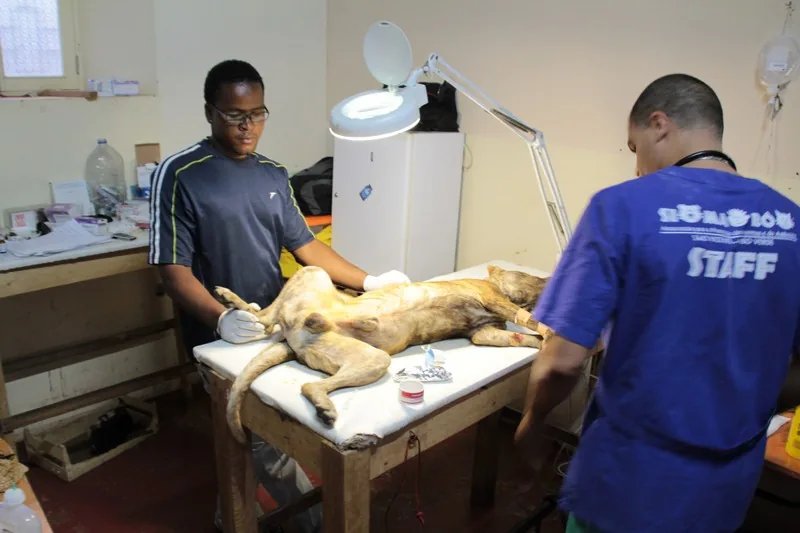
Dr Mascarenhas, of Cape Verdean origin but owner of a clinic in Portugal, while preparing a dog for sterilisation with the help of Elder, a health worker made available by the local delegation of the Ministry of Health to cover for Nanda in the operating theatre.
- It will make it possible to assess the presence of critical points with greater aggregation of dogs due to different environmental factors (presence of food – fish market; presence of rubbish – rubbish tip) and where there is therefore a greater urgency to implement interventions aimed at resolving the critical issue identified (all the animals observed were recorded on electronic cartography, a tool that allows effective population management).
- This first report, where the basic data derived from monitoring are set out, will be followed by a detailed report that will provide further interesting information which, for reasons of time, it was not possible to include in this document (the census operations officially ended on Sunday 20 May).
- For effective monitoring of the project activity, through assessment of population dynamics, continuous monitoring would be desirable.
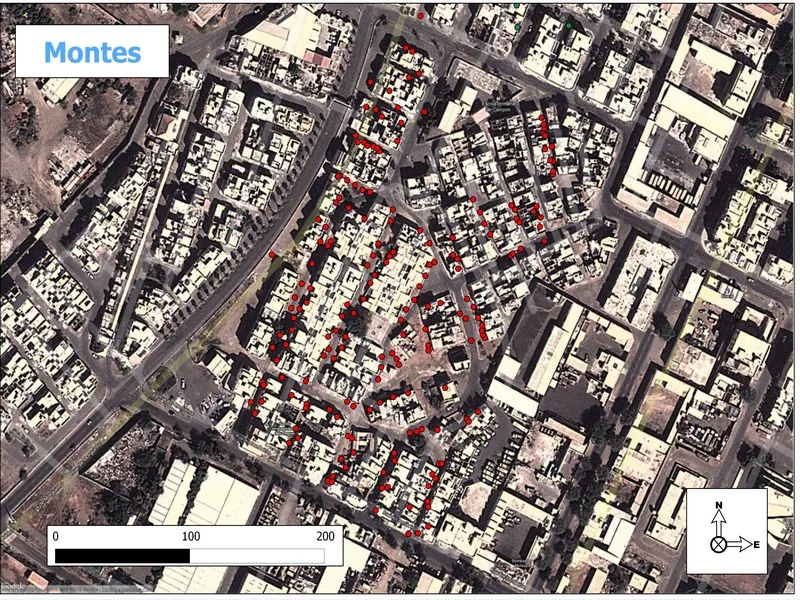
The map of the control area of Montes, a neighbourhood with a high density of stray dogs, with the positions of the dogs counted
- This action will be carried out with the help of volunteers and students from the University of Turin, focusing on the sterilisation/population dynamics combination.
- For this reason it will be very important that the Municipal Chamber bans any form of use of poisons or other methods for controlling the dog population. If such practices continue, it will be impossible to assess reliably the effects of the sterilisation campaign.
- The working protocol tested here could also be successfully exported to other islands of the archipelago, where similar problems have been found. We hope that the competent authorities will take into consideration the possibility of ensuring that this pilot project can be successfully replicated in other contexts as well.
The census results, with which phase 2 of the EU-funded action was completed on schedule, were delivered on 22 May, officially, to Dr Ariana Mota, delegate of the Ministry of Health in São Vicente.