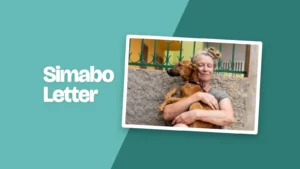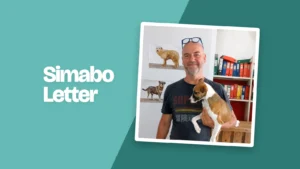
Article written by Marta Romão, who spent two months as a volunteer at Simabo.
Two months as a volunteer at Simabo seem like an eternity for those left behind, for projects left hanging in the air and for the day-to-day routine. But for me, they flew by, pushed along by the island breeze, passed even faster with the beating of the heart and ended in the blink of an eye, waking us from a dream.
These months were more than enough to understand the importance of the work carried out by Simabo, but too few for such an ambitious project.
Simabo’s mission sometimes seems like the island’s horizon: dreamers feel what cannot be seen, spot land even on gloomy days, guided by the sun and the tides. But small souls cannot see tomorrow and have no patience for sowing change.
Part of this association’s work involves running free neutering campaigns all over the island, as well as awareness-raising actions in São Vicente’s schools. Measures that do not always have an immediate effect, but which are the only ones that can guarantee a more harmonious future between people and animals.
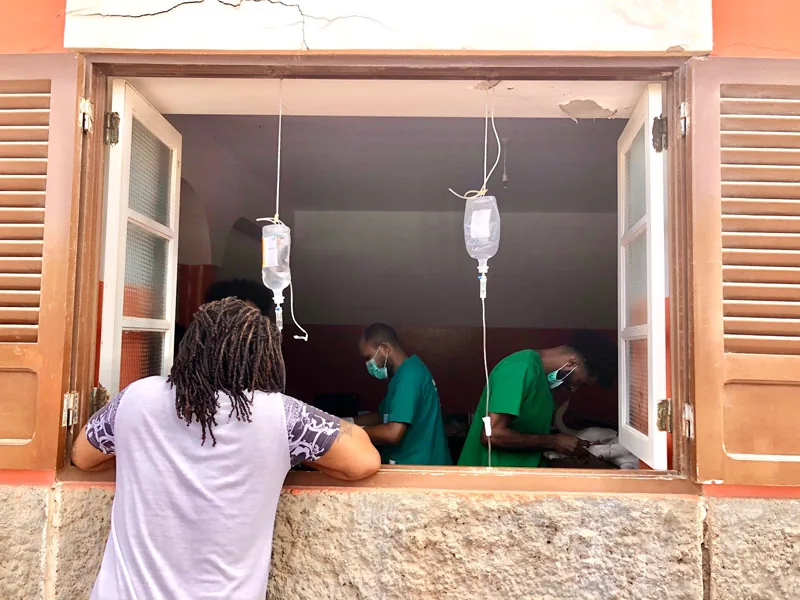
During the neutering campaigns, Simabo staff, helped by volunteers, travel to various areas of the island and set up the operating room in a campaign tent or in a space provided by local associations. From dawn to dusk, they neuter dogs and cats brought by their owners and, when there is time left over, stray dogs caught by local people.
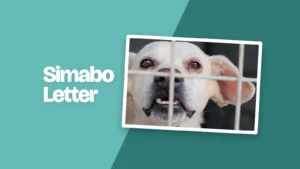
In Lazareto, one of the areas with the lowest turnout for these campaigns, children could be seen running happily with their wheelbarrows, trying to transport stray dogs, to make sure they too would have the chance to live healthier and happier lives.
When I saw them at this game, I thought that, in fact, all our hopes are tied to tomorrow’s generation of adults. And that only their curious, flexible minds can truly understand the importance of what we teach at school: caring for animals, the relevance of neutering and considering them beings like us.
“Got ma catchorr é si ma bo”
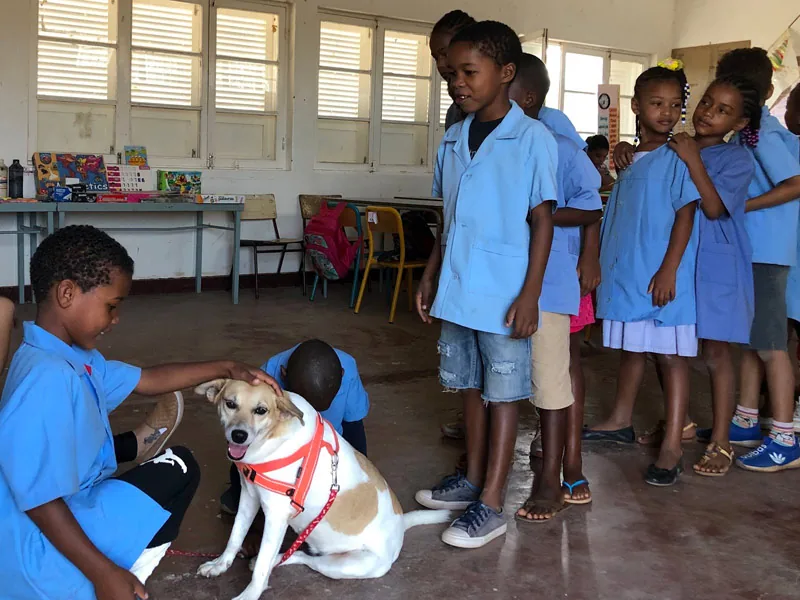
A classroom of 30 children said in chorus. As they explained well, translated from Creole, it means that cats and dogs are like you. They get sad, they feel lonely and abandoned, exactly like us. They like affection, a home and the love of a family, just like us.
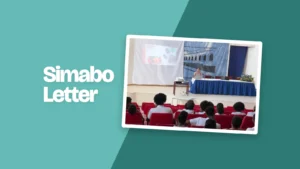
Along with my colleague Danielle, I had the opportunity to go to the three schools of Agrupamento Pólo 14 in São Vicente, where we worked with more than 800 children. In a small school in the hills that surround Mindelo, sitting in a classroom without doors, we learnt that, after all, it is easy to explain the relevance of animals’ feelings. Adults complicate things. Those children, who mix the languages in their heads, have their hearts in the right place, but it is up to us to guide them so that they become tomorrow’s change.
Changing a society’s mindset takes time, persistence and resilience. It is a long road that needs dreamers to show the way when strength falters. Whether volunteers, staff or a child who brings their dog to the vet after a lesson with us.
In these two months, I learnt the truth behind so many clichés. From seeing happiness in the smallest things to learning to listen to the heart. In these two months I cried for the injustices of the world and rolled up my sleeves for the next round. Hand in hand with the strong-hearted souls that make up Simabo, I see a horizon beyond the sea.
The Simabo community is made up of local staff, the network of volunteers and every person who contributes to an animal’s well-being. To continue its mission, Simabo always needs support. Donate your time, donate from afar or help one of the animals they care for. Become a beacon on the darkest nights and help Simabo continue this long journey.