I’d never have thought that my Simabo adventure would begin with a promise made through clenched teeth and end with a question bordering on the surreal. The promise came to me on the spur of the moment: “the next time I come back here,” I told myself, “I swear I’ll make sure I fly with a company that isn’t TACV.” I see that propeller plane and my stomach tightens a bit. But the plane taxis down the runway as if it couldn’t care less about the difference between a propeller and a jet engine, and when it roars away as proudly as the other planes I know, I don’t care any more either.
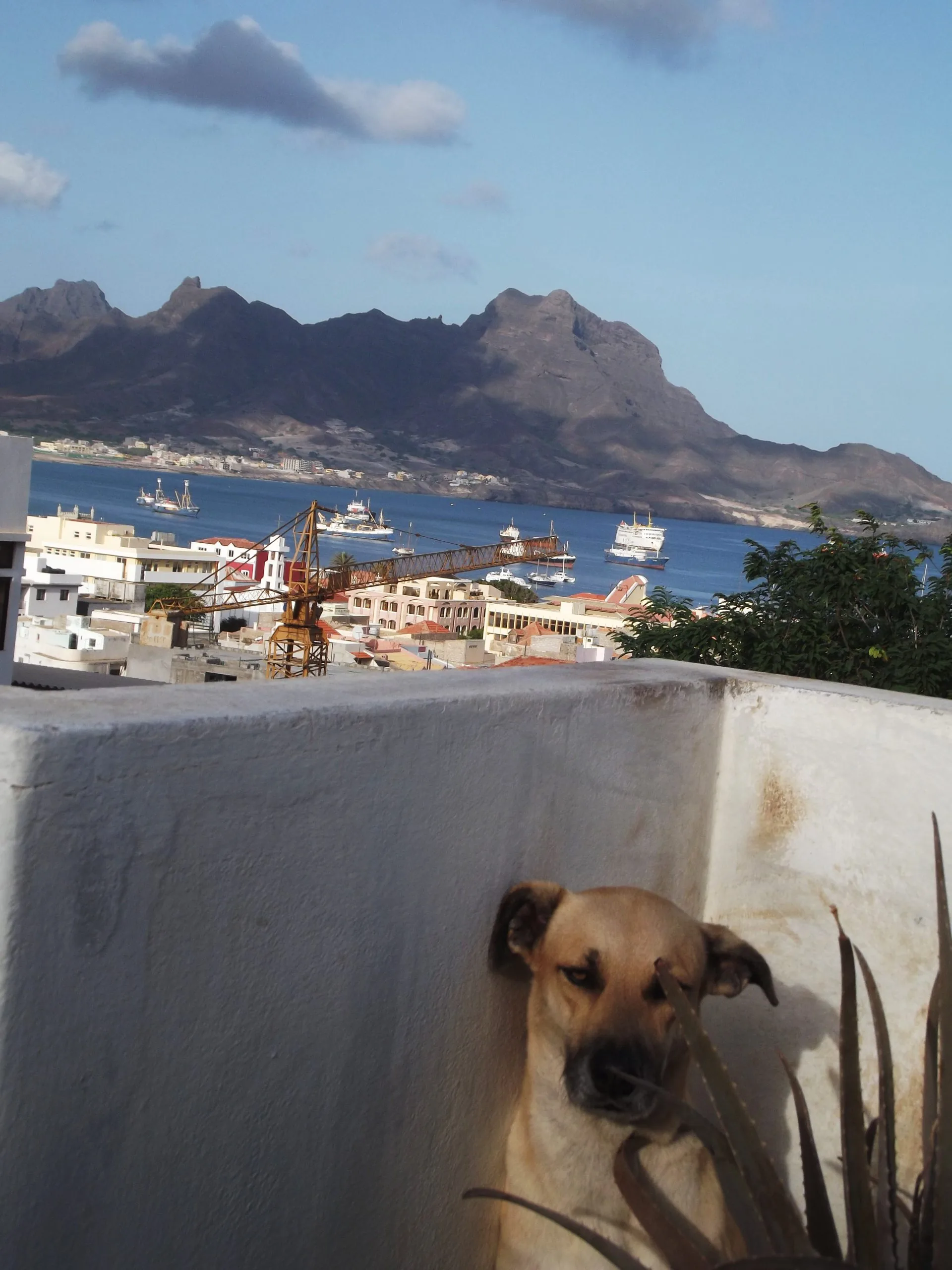
The journey from Sal to Sao Vicente takes less than an hour, the rest feels like all moonlight and honey; the luggage and everything it contains (medicines, muzzles, collars, microchips) arrives bang on time, despite the prayers of people who will stay there staring at the carousel much longer than we do; Ravì, the association’s driver, is waiting for us holding the unmistakable Simabo logo and takes us to what will be our home, the terrace, and we immediately understand why it’s called that. Not a coincidence. A “not a coincidence” with an incredible view, see for yourself.
We get ready for the first meeting with Silvia, to organise the work for the days ahead, and I’m already wondering, as my travel companions surely must have, Marta, my girlfriend and a Veterinary Medicine student, and Paolo, an aspiring vet himself, what the impact on the association will be. We’ve been talking about it for months and now here we are; I wonder whether the expectations, the prayers, the jungle of emails between us and Silvia have been enough to prepare us for anything. But it’s too early to tell, and Silvia, as if to tell us that there it’s like still being at home, cooks us a tomato spaghetti dish like only my mum can make. The impact with the association. To say it’s an experience for brave hearts is definitely an exaggeration, but ninety dogs are ninety dogs. I had never seen them all together. Perhaps only in a film, and only Dalmatians.
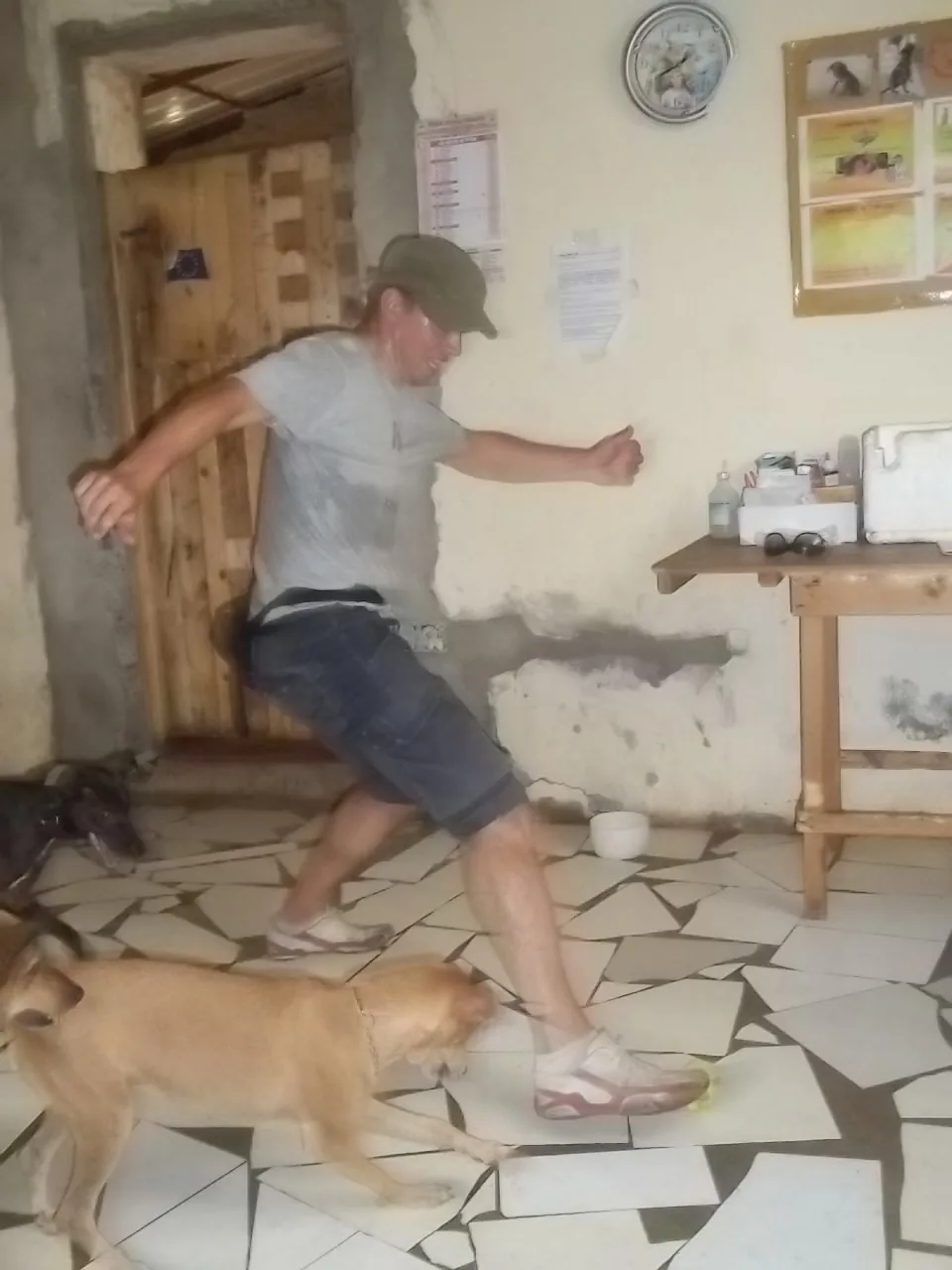
Here, though, there’s something for everyone. I introduce myself to them; I’ll be their dog sitter, Marta and Paolo will do everything that needs doing in the association, I’ll be outside. That is, ninety dogs. Divided by two (I can manage to take two out at a time, “I know”) makes forty-five. Forty-five divided by six (taking away the well-deserved day of rest) makes seven and a half; those will be the walks I need to take them all out at least once a week. I could do even better, of course, but I’ll soon discover that this half-hearted intention will give me sunstroke.
Money well spent sunstroke, I’d say, considering that by the end of the first week the dogs will have had their half-hour in the air almost twice each. At the beginning ninety dogs are little more than lots of little heads peeking out from the pens and through the doors; I tell myself I’ll never manage to learn all those names while Tatiana introduces them to me. By the end of the first day I’ll remember six or seven at most, but in the end I encourage myself by saying that yes, there may be ninety of them, but how many humans have passed through there? As a dog sitter, what number will I be? How many human heads have peeped out between the pens and through the doors? I’ll pretend to be dog sitter number ninety, a sort of forfeit to start on an equal footing; I have no right to think they’ll consider me better than those who came before me, but never mind, now it’s all in my hands, I’ll be the one who has to win their trust. Even if it gives me sunstroke.
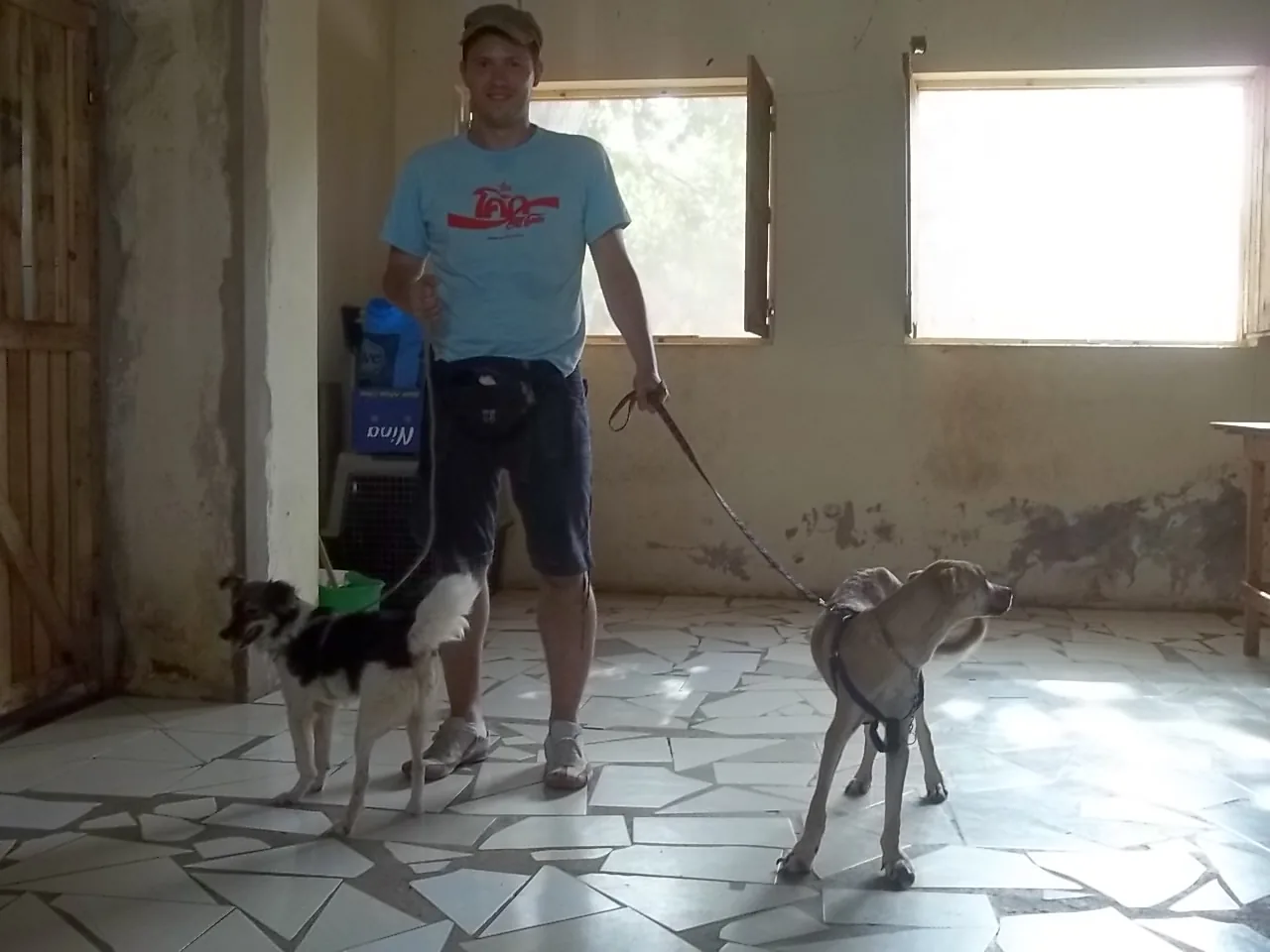
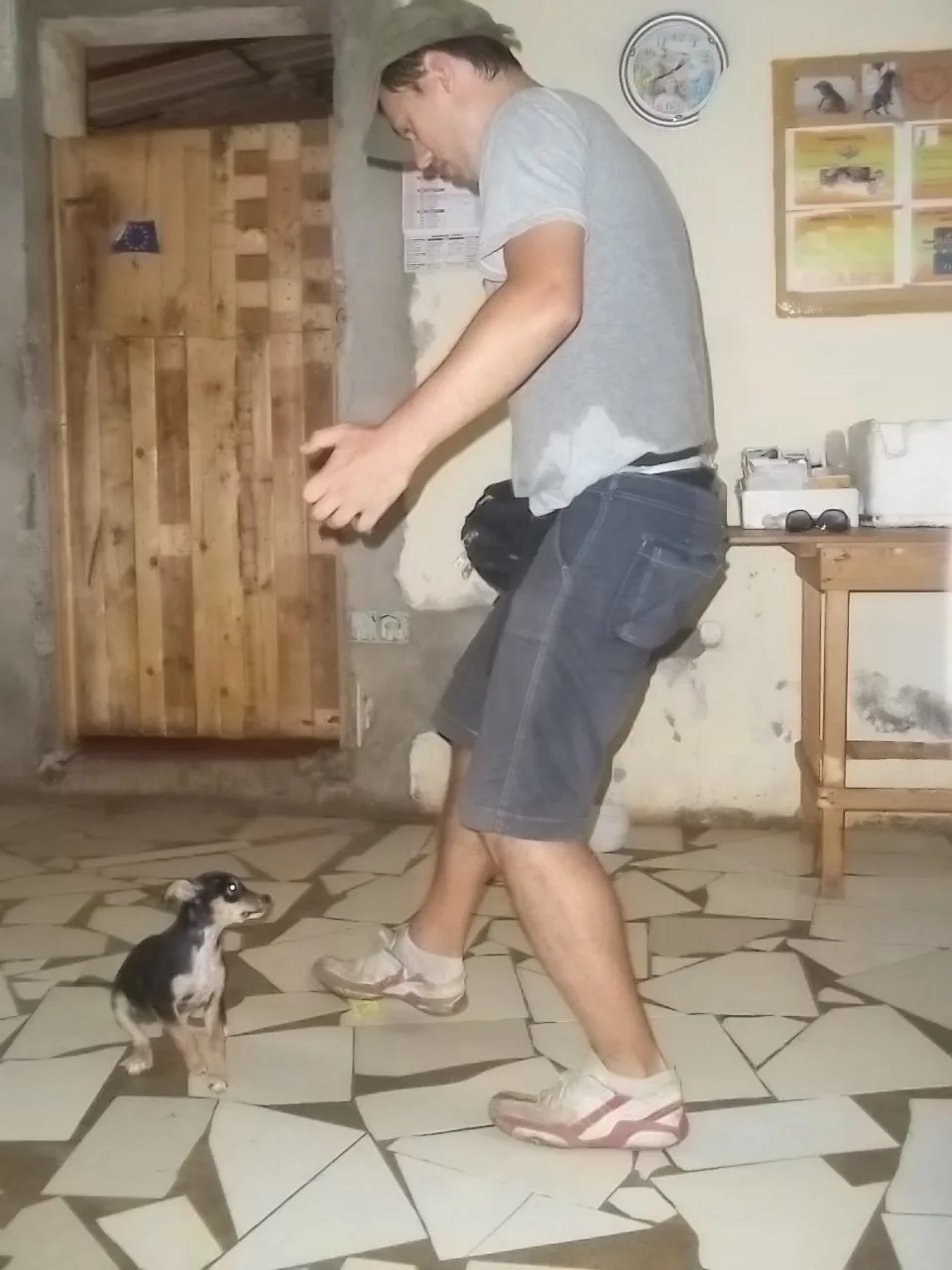
But I know dogs’ trust well. It’s one of the most extraordinary things there is. From a certain point on it becomes unconditional; the dog will no longer ask you for proof by fire, it will learn perfectly well who you are and what you expect from it. It will learn the sound of your footsteps, because footsteps are all the same only for people; for dogs, they are names. For three weeks even my name was a sound, and I smile, telling myself it would have been another name if, for example, I had brought another pair of shoes, and that wasn’t exactly something I had considered when packing my suitcase. And who knows how many times my name changed while I wore away bits of shoe day after day. At the end of the three weeks I threw them away (I’d have done better to give them to Salvadora, a little dog who was so mischievous and loved them so much), I wore them down on the cobbles of Mindelo; not all roads are tarmac and dogs pull. Unfortunately not always in the same direction; that too is a little trick you learn with time, pairing dogs with each other (meaning choosing which ones to walk together). It’s not as easy as it sounds. But in this way I and Anita (dog sitter number ninety-one, who joined me while work was already under way) managed to get little dogs walking who wouldn’t move a step, because they were too frightened by their previous experiences, or little more than puppies who were putting a paw outside the association for the first time. It was enough to pair them with other dogs that had greater confidence; they learned a bit like you learn to ride a bicycle, because at first it seemed all to be a matter of balance: they sat down, got up, wobbled and sat down again. Then they learned the trick, copied the others, discovered that the walk with the volunteers meant freedom, and by the end of the third week they were pulling more than anyone, they were flying. I think that, in absolute terms, nothing has ever given me greater satisfaction, and I believe I can speak on Anita’s behalf too.
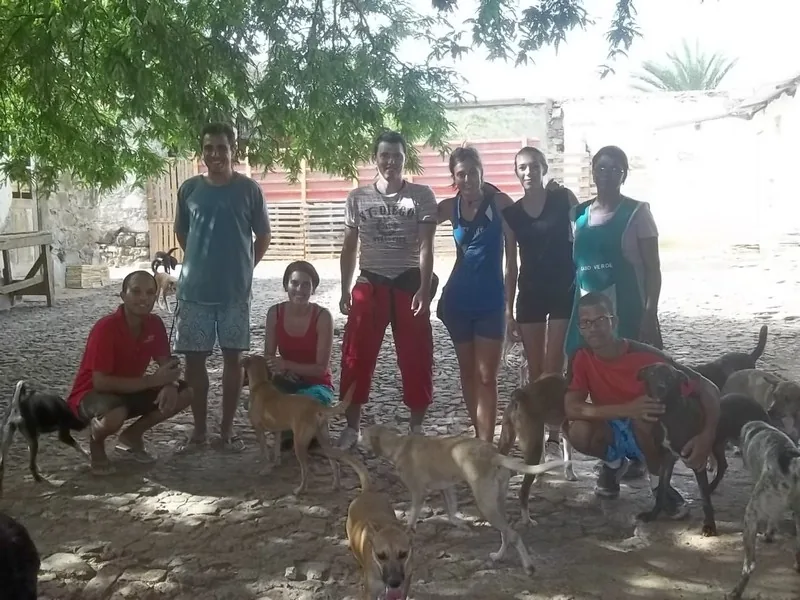
Then, halfway through our stay in Mindelo, there was the march, a word that on its own made what was left of my shoes tremble. Even if it wasn’t a march of kilometres, quite the opposite, the planned route linked the association to the nautical club, the chicest place in all Mindelo. Silvia had summoned other Cape Verdean volunteers, some Portuguese girls, in short a very respectable show of force. The sight was impressive from the start. Nearly all the dogs from the association out for a walk in one go; for me and Anita (and for everyone else) it was like winning the jackpot at the casino. Silvia and I led the way, holding a Simabo banner, the procession opening out behind us. For the colours and the cheerfulness, it really seemed to me like a carnival, with the brightly coloured posters praising respect for animals’ rights, and in the background that soft chatter between dogs and shoe soles.
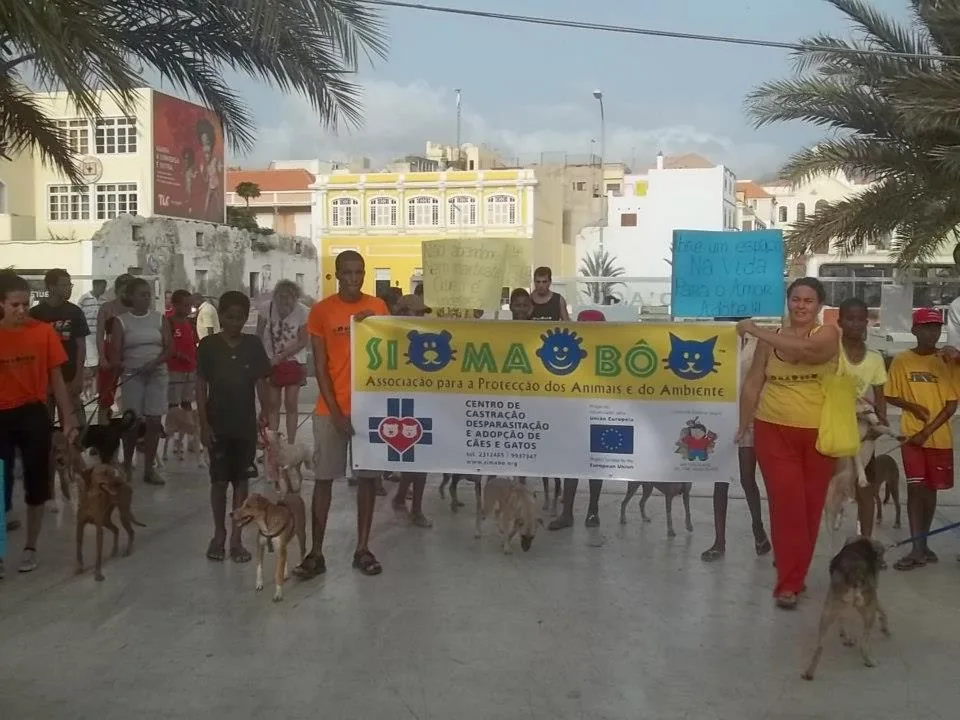
And how lovely it was, for once, to see Marta, my girlfriend, outside the walls of the clinic. She and I were lucky, I must admit, and that luck, beyond having found fabulous volunteers with whom to share this adventure, was also having met very helpful people in sufficient numbers to allow us to have a bit of time just for the two of us. Mindelo is not just the right place to wear out a pair of shoes. It’s a wonderful place, a little Cuba, a Caribbean gem; the food is good and there’s loads of fun to be had. We lived the Festival to the full, a truly lovely experience; it’s hard to describe what it feels like to be in the thick of things with Cape Verdeans, hundreds of people gathered on the beach of Baia Das Gatas, where they meet every year for three consecutive nights to listen to Afro music. The sweat, the bodies, the smoke from the grills, the northern sky. It would have been a fairy tale if it hadn’t been for the weather. And, specifically, the days. As slow as they seemed at the start, they became all the more hurried from halfway through the holiday onwards. And the problem of the days brought another problem with it. The dogs. Especially now that their trust in us had turned into something unconditional. I knew all ninety of their names, and they, as soon as they heard my footsteps saying my name, would stir behind the fences, wait, come towards me. I had learned how to approach them, and they had understood how to put their paws in place when I slipped on the harnesses. And I felt a bit embarrassed when I thought that at the beginning I had badly described them as “lots of little heads peeking out from behind the pens and through the doors”; now I could call them all, one by one, without getting a thing wrong: Samba, Londres, Rapido, Viola, Tarzan… and little Minnie, the newest arrival.
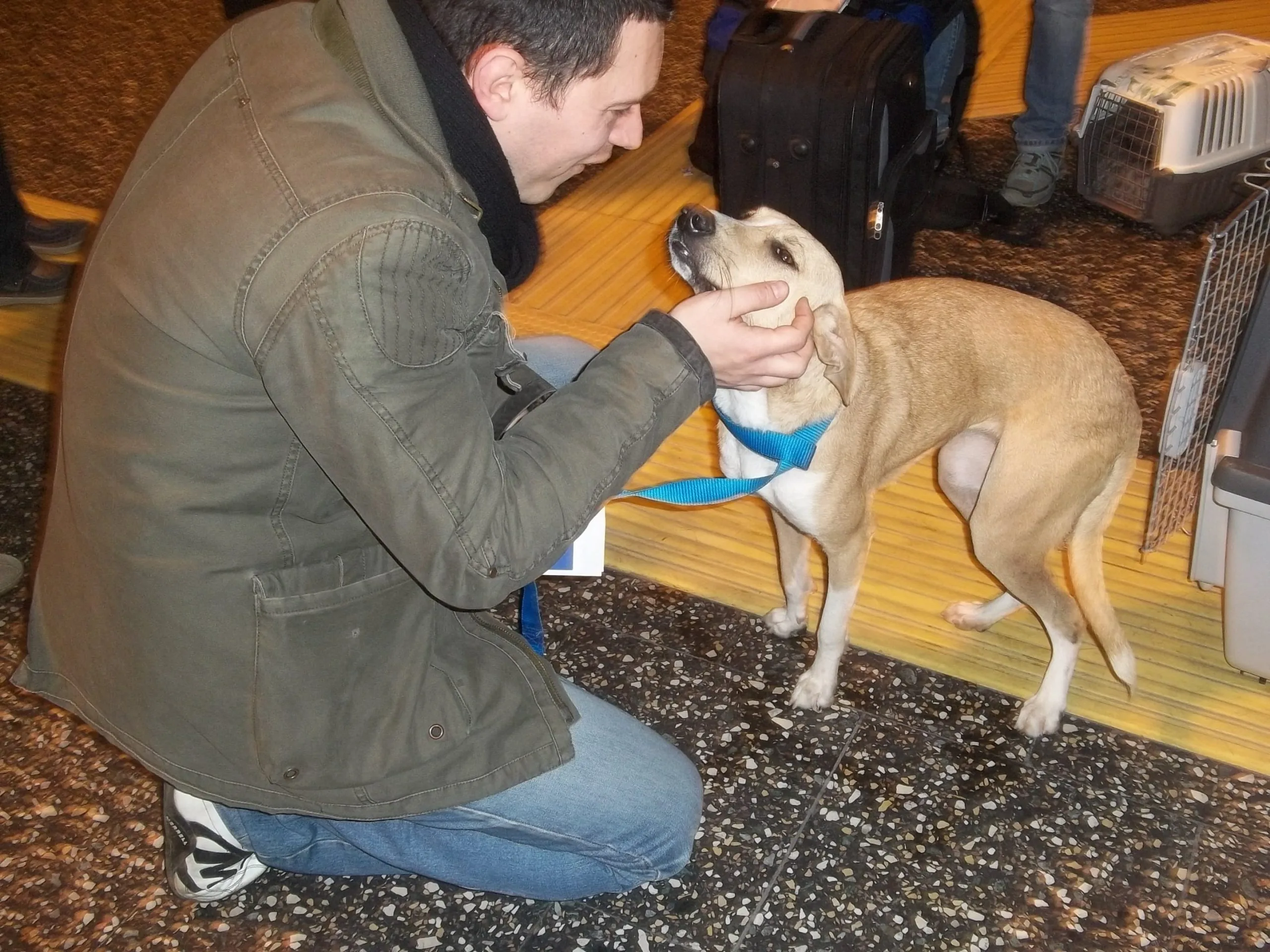
It was at that point, when we were down to the last few days of our stay in Mindelo, that I was struck by that incredible question I mentioned. After three weeks in Cape Verde, in fact, I realised I had never once said a word to the dogs that wasn’t in Italian: “Andiamo”, “Fermi”, “Giù!”, “Basta!”.
But what language did the Cape Verdean dogs speak? Did they understand Italian? Perhaps they preferred Portuguese? Or even Creole? Had they taken me for a fool?
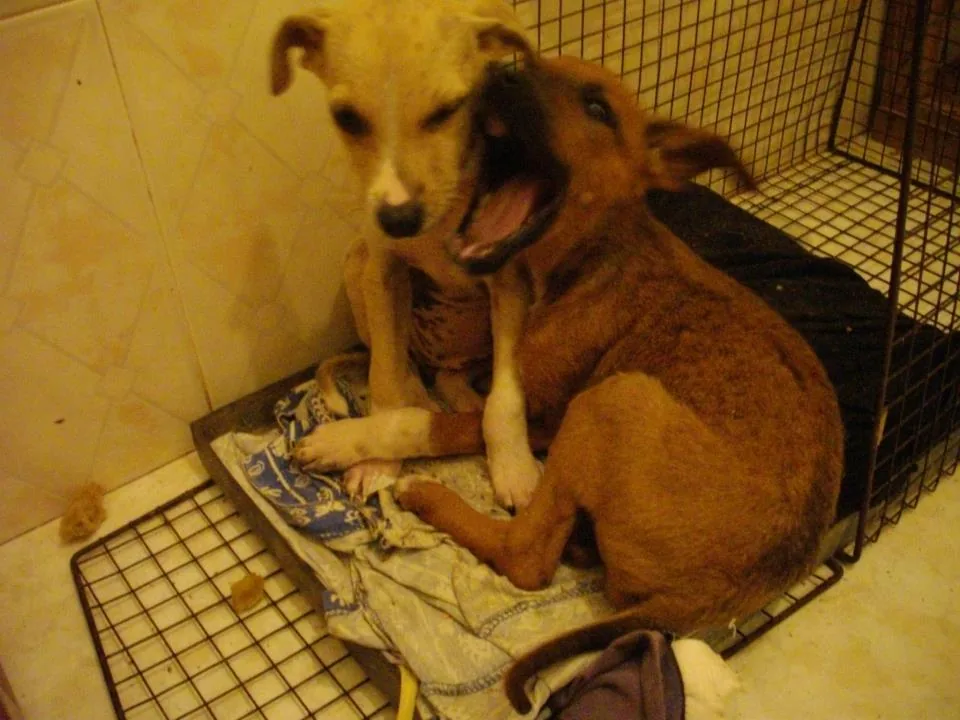
None of that, I answered myself, by then our parallel life had already come to an end. That’s how Marta defined it, and I think she got it exactly right. That’s how you feel when you reach the end: one day back in Italy and Cape Verde is seen not as something near or far, but as parallel. A mirage. And, just like a mirage, distances and proportions vary if the point of view you look from changes. Asking whether those wonderful dogs ever mocked me, I think, is the wrongest way to reread our Simabo experience. Those dogs never thought badly of me, I’m more than certain of it, never! They must always have considered me the best, just as all the eighty-nine dog sitters before me were the best too. Ninety number ones. That’s the absurd and beautiful logic of dogs. They’ll still be waiting for me now, I can feel it. They stop and listen to which name the approaching feet are pronouncing, and every time they ask themselves: could this be Andrea? Let’s hope so.