Here I am back from Mindelo, Sao Vicente, Cape Verde.
Since January 2016, after returning from Mission 2016, I have only ever heard news of the progress and the changes, but if you don’t see and touch it with your own hands, you don’t realise the enormity of the work carried out by Silvia Punzo, who, together with Paolo Manzoni, work and coordinate both veterinary and non-veterinary volunteers, as well as the Cape Verdean staff.
For those who do not yet know Simabo’s project, I should remind you that we are an association founded to help improve the health of the children of Cape Verde, by controlling strays and the health of dogs and cats, who are these little ones’ playmates and companions in life. We also deal with caring for the environment through sustainable tourism.
Through awareness-raising work in schools and via the media, we try to increase responsible adoptions of sterilised animals, and we treat these dogs and cats free of charge.
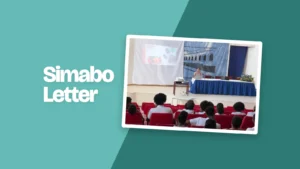
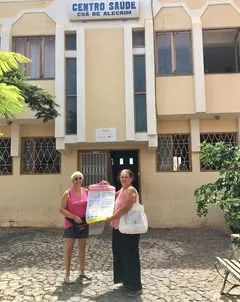
We work with the Cape Verdean Ministry of Health, which has recognised the great value of our work, and this year during my mission we went to deliver the poster from the Ministry of Health and Simabo, created for us by the brilliant Andrea Musso, our “creative” volunteer.
The delivery of the poster began at the various “Centro de Saude”, and will continue in all the schools, which during my stay were closed for the summer holiday.
It is very difficult and limiting, in just a few lines, to describe everything I saw and did during my days in Sao Vicente. The hostel, which I had not yet seen, is beautiful, always full of tourists, who appreciate the stay and often ask to help, giving up part of their holiday time to dedicate it to the dogs and cats housed in the shelter, or even stopping by Simabo’s clinic to help the Vet and the veterinary nurse.
The clinic is the only facility open every day, including Saturdays and Sundays, and they carry out 30/40 consultations a day, including at least 4/5 sterilisations a day (except on Saturdays and Sundays, because the local vet does not work, but if there are outside vets then sterilisations are also organised on public holidays).
We regularly go and administer anti-parasitics to dogs and cats in the villages of the island, and in the various neighbourhoods of Mindelo.
When we manage to raise enough money to buy the drugs needed for the sterilisation campaigns (anaesthetics, painkillers, antibiotics and suture thread), we manage to be more effective and work in more neighbourhoods too, sometimes reaching 20/30 sterilisations a day.
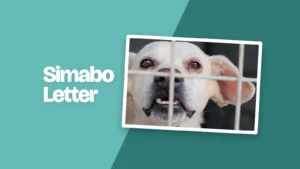
But I’m digressing, let’s go back to my impressions of Simabo’s progress: I visited the 101 dogs at the Simabo shelter, apart from “Quemade” whom I could not visit because he is bitey, I found them all and I mean all of them, clean, happy and plump.
It was moving to see the dogs again with their stories, some of them have been with us since the early years unfortunately, some had been adopted and then returned, but all happy and outgoing, trusting.
Simabo’s philosophy is not that of a kennel, that is, our shelter is an aberration to our philosophy, but it was born out of the need to safeguard the lives of sterilised animals, while waiting to be adopted or released back into the area from which they came.
While waiting for that, the shelter is organised with large boxes where 3 to 5 dogs live together, and they are let out once a day into an open area to stretch their legs and taken for a walk on a lead once a day (there are 2 people in the morning and 2 in the afternoon, who are dedicated to cleaning and walking, plus a night watchman).
Yes, you may be thinking, why a guard for the dogs? Because at night they steal the fencing, because at night they killed 4 dogs by stoning, so there was a need to hire a guard.
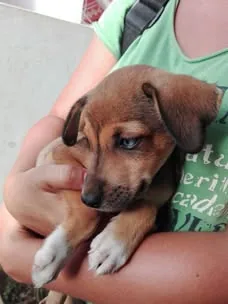
I wanted to clarify the 101, the 100 are the dogs in the shelter kennel, the 1 is a little lame puppy, whom we found among the bowls of food ready for the dogs. What can I say, we are treating him and we will try to find him a home, even internationally if a good adopter comes forward.
He must absolutely not go into the shelter, for now we have called him “Pichinin”.
Simabo, in its own small way and with great financial difficulty, gives regular employment to 15 Cape Verdeans, and I assure you that in local reality, this means a great deal indeed.
In the cat shelter, always with the same spirit of “waiting for adoption”, we currently have 18 cats, who share a mini apartment with 2 rooms, a terrace and a come-and-go door to the outside, where they are free.
It would seem an ideal arrangement, but there is a but, because in order to provide these spaces for the cats, a fairly large house had to be rented, so that an hostel could be run and the proceeds from the hostel can pay, at least in part, the rent.
But not all tourists accept the presence of cats.
A big problem is that some of the cats who went out were found dead from beatings or killed by stray dogs, so we are trying to find adoptions, including international ones, to empty the cat shelter a little.
Soon we will try to launch a fundraising campaign for this initiative; bear in mind that for each cat to leave about €300 is needed, having said that, it is still a real pleasure to go to the cat shelter.
At the medical check-up everyone is in good shape, clean, wormed and flea-free, only a couple are a bit underweight, but the reason may be linked to the fact that in recent months the company that used to give us fish no longer does so, and the change in diet has not been accepted by everyone.
On arrival at the cat shelter the welcome is incredible, you find yourself literally overwhelmed by purring, some rub against your legs, some with a paw touch you to call your hand back for a cuddle, some, shyer, stay to one side but hypnotise you with their gaze, and anyone who loves cats knows what I mean, that feeling that only a feline gaze can give you, it is looking right inside you.
As I write, I am moved by the memory of those feelings, because they know you are only passing through and will not take them away with you, and despite that they make the most of the cuddles.
Only some, proudly, do not come close, and observe you almost indifferently.
The progress of the Si Ma Bo project is very evident, if you think that in the early years we needed to have telemedicine contact at least 2/3 times a day, and now I notice that the staff we have trained are practically self-sufficient.
Entering the clinic is always incredible, they wait for your arrival with trepidation, but with that “no stress” Cape Verdean calm, they wait without argument, and when you talk to them they listen trustingly, without questioning your diagnosis with “Google says so or I read this on the internet”. It is true we have little on the island, but with the human doctors we manage to work together, for example if an X-ray is needed, in the evening on weekdays you can go to the human clinic to have it done, as with the microscope, and to centrifuge the blood. Everyone chips in to help us. We go back to making diagnoses using your “hands, eyes, nose and ear”.
But the greatest satisfaction is noticing that the protocols we studied, for therapies and surgery, work well and have been assimilated so well that they no longer require my intervention, except rarely, for things that fall outside the routine.
I noticed that some protocols may be changed a little, for example those for anti-parasitics, partly because of the possibility of obtaining new drugs and partly because, by treating the animals thoroughly, it is no longer so frequent to find animals that are very infested.
Obviously, for those who have never been treated, we will start with the usual protocol and then vary to a less aggressive protocol.
A special mention must go to my colleague Dr Erica Gatti who, with her energy and her work, has become a pillar of the association, the artist Milena Maiorano who decorated the clinic and the hostel, and supported me during my visits to the shelter, but I would like to thank Silvia Punzo, without her Si Ma Bô would not exist, she is a force of nature, I do not know how she manages to do everything without forgetting anything.
Silvia coordinates the local staff, work shifts, holidays, etc., coordinates the arrivals and departures of tourists, including travel suggestions, to and on the other islands, coordinates flights, arrivals and departures, including transfers with driver and/or taxi, coordinates purchases of drugs for the clinic, the sourcing of food for the animals, and so on and so forth.
I do not know how she does it, but a bit of help would be needed, who is willing?..
I believe she may seem a bit exhausted, after 10 days I am exhausted, I do not know how she manages to hold out, what can I say, Thank you Silvia, keep going .
Silvia, the great work you have done is clear to see, I assure you, every time I come back from the mission I am sad, because I leave a bit of my heart there, but absolutely motivated to carry on, if you can do it, Silvia, then I can do it too, damn it.